Posts

Showing posts with the label Equipment

What Is a Broomstick Putter?

Image
The "broomstick putter" in golf is a putter with a much longer shaft compared to traditional putters, which usually are around 32 to 36 inches in length. A broomstick putter typically ranges from 46 to 54 inches. The clubheads on broomstick putters are the same as those on "regular" putters, but they have that longer shaft, with the grip end covered by a longer (and sometimes split) grip.

How Graphite Golf Shafts Are Made

Image
Graphite is one of the two common materials (along with steel) used to make golf shafts. Have you ever wondered just how golf designers and manufacturers turn graphite into golf shafts? We have.

How Steel Golf Shafts Are Made

Image
There are two primary ways to manufacture steel golf shafts. One is called "seemless" construction; the other is "welded tube" construction.

What Is the 10-Iron in Golf?

Image
Have you ever seen, or heard of, a golf club called the 10-iron? You have, actually, even if you don't realize it. That's because 10-iron is just another name for a pitching wedge.

Golf Ball Size: What Are the Minimum and Maximum?

Do the USGA and R&A, the two governing bodies that set the rules of golf, impose a minimum and maximum size for golf balls? Yes and no. There is a minimum size, but there is no maximum size.

Explaining the Meaning of Numbers on a Golf Ball

Image
Do you know what the numbers on a golf ball mean? Do you know whether they even mean anything at all? The numbers that are most commonly stamped by manufacturers onto golf balls do not really having a meaning , but they certainly do have a purpose . We'll explain that, plus what other numbers golfers might see on a ball, and what those numbers mean.

What Was the Golf Club Called the 'Driving Putter'?

The "driving putter" (often hyphenated as "driving-putter") was a golf club, long since gone from golf, that was sometimes used by pre-20th century golfers. But did they use it for driving, or for putting? Yes!

That Time a Rules Loophole Made Some PGA Tour Pros Use 25-Year-Old Wedges

A funny thing happened on the PGA Tour in 2010: A loophole in the rules was discovered — remembered, actually — and a handful of golfers began using 25-year-old wedges in order to exploit it.

Golf Balls Stamped 'Practice': What You Need to Know

Image
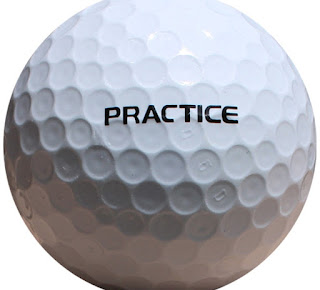
Have you ever seen a brand-name golf ball — say, a Titleist or TaylorMade ball — that had the word "Practice" stamped on it? What does it mean when a manufacturer does that? Are "Practice" balls just as good as "regular" balls? Let's answer these and other questions.

X-Out Golf Balls: What You Need to Know

Image
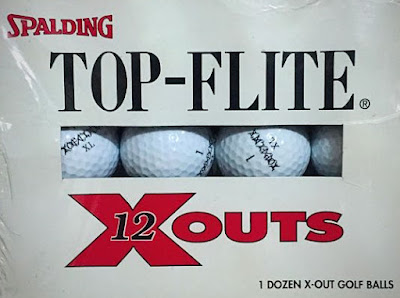
What are X-out golf balls? They are golf balls that have some kind of small defect — in some cases, just a cosmetic defect — that the manufacturer doesn't want to trash but can't sell at regular prices because of the defect(s). So the manufacturer labels them X-outs and offers them at a discount, usually a steep discount.

Can You Use 'Practice' Balls in Competition? Are They Conforming?

Image
Sometimes golfers buy golf balls whose manufacturer has stamped the word "Practice" on them, and priced them at a discount. It's a way to save a little money. But what is the status of such "Practice" balls under the rules: Are they "legal"? Can they be used in tournament play?

Are X-Out Golf Balls Allowed Under the Rules?

Golfers who want to save a few bucks sometimes buy a type of golf ball known as an X-out . These are balls deemed by the manufacturer to have some kind of small defect. But are X-outs considered in the Rules of Golf? Are they "legal" for tournament play? Sometimes, yes! But in high-level competitions, almost certainly not.

What's the Difference Between X-Outs and Practice Balls?

There are a couple types of discount golf balls that golfers sometimes run across, either online or in physical stores: X-outs and "practice" balls. In both cases, these are golf balls whose manufacturer has decided it can't market and sell them at regular price due to some kind of quality-control issue. But is there any difference between an X-out and a ball stamped "practice"?

How to Use an On-Course Golf Ball Washer

Image
Many golf courses provide on-course ball washers to golfers. They can often be found atop a post near the teeing area of each hole: A plastic or metal box or other container that holds water and, often, some type of detergent. Inside the box, there are also bristles for scrubbing. If you are a newcomer to the game, you might now know how to use one. So read on.

Can You Use a Tee to Repair Pitch Marks?

Image
You reach the putting green and discover your approach shot has left a nice, deep pitch mark on the soft surface. You reach into your pocket for your trusty, two-pronged divot tool (a k a pitch tool, ball mark tool) only to discover you don't have it. But you do have a golf tee. Can you use the tee to fix that pitch mark?

What Is Perimeter Weighting in Golf Clubs?

In golf clubs, "perimeter weighting" refers to the distribution of the weight in a clubhead more evenly around the periphery of a club, as opposed to weight being more concentrated behind the clubface's center. The term can apply to any type of golf club, but is most commonly used when discussing irons.

What Is a Blended Set or Combo Set of Irons?

Have you heard the golf club terms "blended set" or "blended irons"? What about "combo set" or "combo irons"? They mean essentially the same thing, and those terms are referring to a way of building an iron set that involves mixing-and-matching clubs taken from several different sets.

How the 'Street Price' of a Golf Club Compares to MSRP, MAP

If you are shopping for new golf clubs and reading articles and reviews, or if you are just an equipment junkie and enjoy reading manufacturers' news releases about new gear, then you've probably run across the term "street price." Do you know what "street price" represents when equipment companies cite it? Is it higher or lower than the MSRP?

Definition: The Driving Iron in Golf

What is a "driving iron"? It's a golf club ... or, rather, several golf clubs, because "driving iron" can be used to refer to several different things. We'll go over those definitions in this article, but keep this is mind: driving irons, the club, are rarely used today; and "driving iron," the term, is used far less often today, too.

The Divot Tool (Ball Mark Tool) in Golf and How to Use It

Image
Fixing ball marks, also called pitch marks , on putting greens is something every golfer needs to know how to do. So most golfers, at least those who are properly brought into the game with an appreciation for good golf etiquette and caring for the course, are introduced very quickly to the small item known as a divot tool or ball mark tool.